Choosing the Right Lens for Landscape Photography
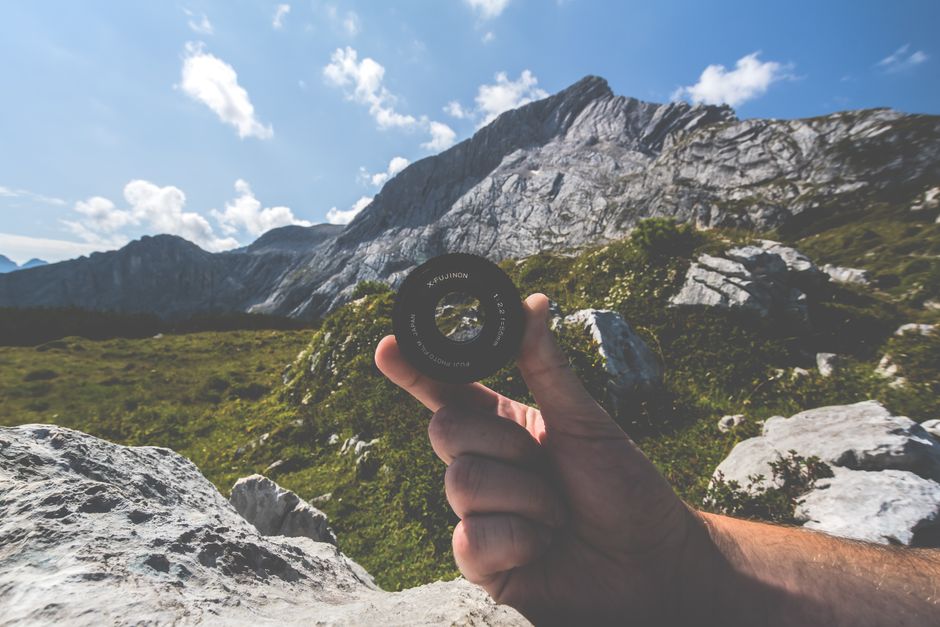
Selecting a lens for landscape photography involves understanding how different focal lengths and lens designs interact with natural scenes. Each lens type presents its own set of characteristics that influence the way a landscape is captured, from the breadth of the vista to the compression of distant elements. The choice is not about identifying a single superior option, but rather about matching a lens’s strengths to the photographer’s specific intentions and the conditions of the scene.
Wide-angle, telephoto, and prime lenses each offer distinct approaches to framing and composition. A wide-angle lens might be chosen to emphasize foreground detail and convey a sense of depth, while a telephoto lens can isolate a mountain peak or compress layered ridges. Prime lenses, with their fixed focal lengths, often provide a different level of optical performance and simplicity. By examining the functional attributes of each category, photographers can better anticipate how a lens will render the landscape and decide which tools to bring into the field.
Wide-Angle Lenses for Expansive Scenes
Wide-angle lenses, typically with focal lengths between 14mm and 35mm on full-frame cameras, are commonly associated with landscape photography. Their primary attribute is the ability to capture a broad field of view, making them suitable for sweeping vistas, grand horizons, and scenes where the photographer wants to include both a prominent foreground and a faraway background. The exaggerated perspective created by a wide-angle lens can make foreground objects appear larger and more dominant, which is a technique often used to lead the viewer’s eye into the frame.
One aspect of wide-angle lenses that photographers consider is distortion, particularly at the edges of the frame. Barrel distortion can cause straight lines to curve outward, which may be noticeable in scenes with architecture or distinct horizon lines. Modern lens designs incorporate corrective elements, but some distortion may still be present and can be managed through post-processing or careful composition. Depth of field is another factor; wide-angle lenses generally offer greater depth of field at a given aperture compared to longer focal lengths, allowing for sharp focus from near to far without needing very small apertures that might introduce diffraction.
The use of filters, such as polarizers or neutral density filters, is also relevant with wide-angle lenses. The front element often bulges, making it difficult to attach screw-in filters without vignetting. Many photographers use square filter systems or choose lenses with a flat front element to accommodate filters more easily. Overall, wide-angle lenses provide a tool for encompassing the scale of a landscape and emphasizing spatial relationships within the scene.
Telephoto Lenses for Detail and Compression
Telephoto lenses, with focal lengths typically starting around 70mm and extending to 200mm or longer, serve a different purpose in landscape photography. Rather than capturing a broad view, telephoto lenses allow photographers to isolate specific elements within a landscape, such as a lone tree on a ridge, a distant waterfall, or a pattern of light on a mountainside. The narrower angle of view reduces the amount of sky and foreground, helping to create a more minimal composition.
A notable characteristic of telephoto lenses is perspective compression. Objects that are far apart in space appear closer together when viewed through a long focal length. This effect can be used to layer elements, such as having a series of ridgelines stacked behind each other, creating a sense of depth through overlapping forms. Telephoto lenses also have a shallower depth of field at a given aperture compared to wide-angle lenses, which can be used to blur background details and emphasize a specific subject. However, in landscape photography, photographers often stop down the aperture to maintain sharpness throughout the compressed scene.
Stability becomes an important consideration with telephoto lenses. Even slight camera movement can result in blurred images, especially when using longer focal lengths. A sturdy tripod, combined with techniques such as mirror lock-up or electronic shutter, can help ensure sharpness. Additionally, atmospheric conditions like haze or heat shimmer can be more pronounced when photographing distant subjects, so telephoto lenses require careful attention to weather and lighting conditions.
Prime Lenses for Optical Quality and Consistency
Prime lenses, which have a fixed focal length, are often chosen for their optical performance and simplicity. Without the need to accommodate a zoom range, designers can prioritize image quality, leading to lenses that often exhibit higher sharpness, better control of aberrations, and wider maximum apertures compared to zoom lenses. For landscape photography, a prime lens with a focal length such as 24mm or 35mm can serve as a reliable tool for capturing scenes with consistent perspective and minimal distortion.
The fixed focal length requires the photographer to physically move to compose the shot, which can encourage more deliberate exploration of the landscape. This constraint can lead to compositions that are more carefully considered, as the photographer must find the right distance and vantage point to achieve the desired framing. Prime lenses also tend to be smaller and lighter than zoom lenses covering a similar focal length, making them easier to carry on long hikes.
Another advantage of prime lenses is the ability to use wider apertures, which might be useful in low-light situations such as twilight or forest scenes. However, for typical landscape work, apertures are often stopped down to f/8 or f/11 for optimal sharpness, so the wide aperture advantage is less relevant in those scenarios. The trade-off is the lack of flexibility; a photographer with a single prime lens cannot quickly change focal length without swapping lenses. Many landscape photographers carry a set of prime lenses to cover different perspectives, but this requires additional gear management.
Factors Influencing Lens Selection
Choosing between these lens types involves weighing several factors that relate to the intended subject and shooting conditions. The focal length range desired for a particular landscape is a starting point. For a vast mountain panorama, a wide-angle lens may be the natural choice, while for capturing the texture of a distant cliff face, a telephoto lens might be more suitable. Prime lenses can fit into either category depending on the focal length chosen.
Portability and weight are practical considerations, especially when hiking to remote locations. Zoom lenses that cover a wide-to-telephoto range, such as a 24-105mm, offer versatility but may be heavier than a single prime. Conversely, carrying multiple primes can also add weight. Budget is another factor, as high-quality prime lenses can be expensive, but they often provide superior optical performance. Weather sealing is relevant for outdoor use, as landscapes often involve dust, moisture, or cold conditions. Lenses with robust sealing can withstand these elements better.
The role of post-processing also affects lens choice. Distortion and vignetting can often be corrected in software, so the importance of these optical characteristics may be reduced. However, issues like chromatic aberration or flare might be more difficult to fix and may influence the decision to use a lens with better coatings. Ultimately, the selection process is about understanding the lens’s properties and how they align with the photographer’s goals for each scene.